Units 155 – 158, 17th Floor, No. 1, Skyport Tower, Hurriyet Blvd., Yakuplu District, Beylikduzu County, Istanbul 34524 - Turkiye (former Turkey)
 TR
TR
 AR
AR
 RU
RU
 FA
FA
Communication methods
Units 155 – 158, 17th Floor, No. 1, Skyport Tower, Hurriyet Blvd., Yakuplu District, Beylikduzu County, Istanbul 34524 - Turkiye (former Turkey)
08504712222
info@adlimgostar.com.tr
ALUMINUM COMPOUNDS
Introduction and Background
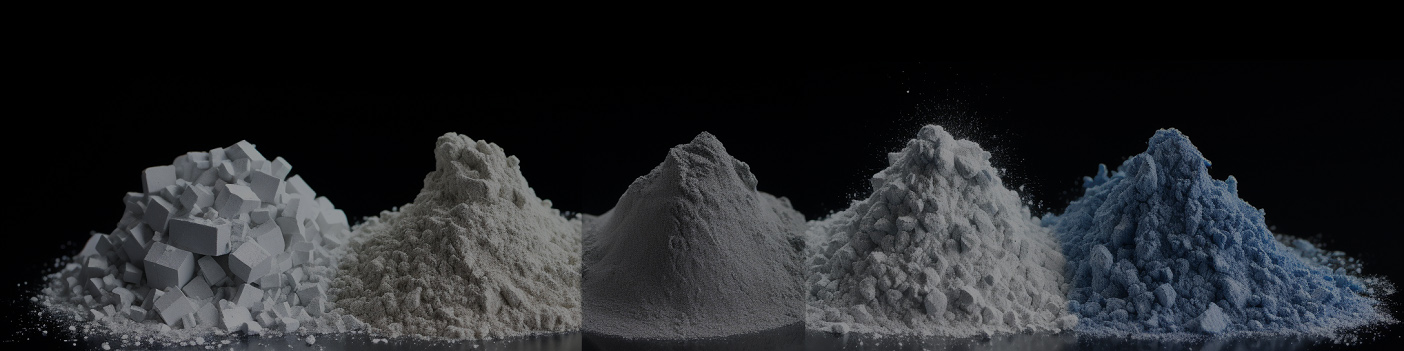
Aluminum (Al), the third most abundant element in the Earth's crust after oxygen and silicon, forms a wide variety of compounds by combining with other elements. Aluminum compounds play critical roles across diverse industries including construction, aerospace, automotive, packaging, electronics, chemical manufacturing, water treatment, and pharmaceuticals.
Aluminum compounds are prized for their lightweight nature, corrosion resistance, non-toxicity, and versatile chemical behavior — including amphoteric characteristics (ability to react with both acids and bases).
Main Types of Aluminum Compounds
Aluminum compounds can be classified based on the nature of their chemical bonds, their oxidation states, and their applications.
(A) Oxides and Hydroxides
- Aluminum Oxide (Al₂O₃) — also called alumina.
- Aluminum Hydroxide (Al(OH)₃).
(B) Salts
- Aluminum Sulfate (Al₂(SO₄)₃).
- Aluminum Chloride (AlCl₃).
- Aluminum Nitrate (Al(NO₃)₃).
- Sodium Aluminate (NaAlO₂).
- Ammonium Aluminum Sulfate (AlNH₄(SO₄)₂·12H₂O) — commonly called "Ammonium Alum".
(C) Complex Compounds
- Alums — general formula MAl(SO₄)₂·12H₂O (M = potassium, sodium, ammonium, etc.).
- Aluminum Organo-compounds — e.g., aluminum alkoxides and aluminum stearate.
Technical Details, Chemical and Physical Characteristics
Below are key aluminum compounds with their technical specifications:
Aluminum Oxide (Al₂O₃)
- CAS Number: 1344-28-1
- Molecular Weight: 101.96 g/mol
- Appearance: White crystalline solid or powder
- Melting Point: 2,072°C
- Boiling Point: 2,977°C
- Density: 3.95–4.1 g/cm³
- Solubility: Insoluble in water; soluble in strong acids and bases (amphoteric).
- Properties:
- Very hard (Mohs hardness ~9).
- High thermal conductivity.
- Chemically inert at standard conditions.
Applications:
- Manufacture of aluminum metal (Hall–Héroult process).
- Abrasives (sandpapers, grinding wheels).
- Refractory materials for furnaces and kilns.
- Ceramic products and spark plugs.
- Catalyst and catalyst support in chemical reactions.
Aluminum Hydroxide (Al(OH)₃)
- CAS Number: 21645-51-2
- Molecular Weight: 78.00 g/mol
- Appearance: White gel or powder
- Decomposition: Decomposes to Al₂O₃ above 300°C.
- Density: 2.42 g/cm³
- Solubility: Insoluble in water but reacts with acids and bases.
Applications:
- Fire retardant in plastics, rubbers, and textiles.
- Antacid formulations in the pharmaceutical industry.
- Water purification (coagulant aid).
- Manufacturing alumina for aluminum production.
Aluminum Sulfate (Al₂(SO₄)₃)
- CAS Number: 10043-01-3
- Molecular Weight: 342.15 g/mol (anhydrous)
- Appearance: White crystalline solid or powder
- Solubility: Highly soluble in water; forms acidic solutions.
Applications:
- Water and wastewater treatment (coagulation and flocculation agent).
- Paper manufacturing (sizing agent).
- Mordant in dyeing processes.
- Foam fire extinguishers.
Aluminum Chloride (AlCl₃)
- CAS Number: 7446-70-0
- Molecular Weight: 133.34 g/mol
- Appearance: White or yellowish solid (anhydrous); forms hexahydrate with water.
- Melting Point: 192.4°C (anhydrous)
- Boiling Point: Sublimes at ~180°C.
- Reactivity: Highly reactive with moisture, releasing HCl fumes.
Applications:
- Catalyst in Friedel-Crafts alkylation and acylation reactions (organic synthesis).
- Production of petrochemicals.
- Manufacturing of aluminum metal.
Aluminum Nitrate (Al(NO₃)₃)
- CAS Number: 13473-90-0
- Molecular Weight: 213.00 g/mol
- Appearance: White crystalline solid
- Solubility: Soluble in water, ethanol, and acetone.
Applications:
- Tanning leather.
- Anti-perspirants.
- Corrosion inhibitors.
- Laboratory reagent.
Sodium Aluminate (NaAlO₂)
- CAS Number: 11138-49-1
- Molecular Weight: 81.97 g/mol
- Appearance: White powder or crystalline solid
- Solubility: Soluble in water.
Applications:
- Water treatment (coagulant).
- Paper production.
- Cement additives.
- Firebrick manufacturing.
Differences Between Main Aluminum Compounds
|
Compound |
Solubility |
Main Use |
Special Properties |
|
Aluminum Oxide |
Insoluble |
Abrasive, catalyst support, ceramics |
Very high hardness, inert |
|
Aluminum Hydroxide |
Insoluble |
Fire retardant, antacid, water purification |
Amphoteric, decomposes to Al₂O₃ |
|
Aluminum Sulfate |
Soluble |
Water treatment, paper sizing |
Strong flocculant |
|
Aluminum Chloride |
Reacts with water |
Organic synthesis catalyst |
Highly hygroscopic, releases HCl |
|
Aluminum Nitrate |
Soluble |
Tanning, corrosion inhibitor |
Oxidizer |
|
Sodium Aluminate |
Soluble |
Water treatment, construction |
Alkaline, dissolves easily |
Applications Across Industries
Water and Wastewater Treatment
- Aluminum sulfate and sodium aluminate are key coagulants for removing suspended particles.
Chemical Industry
- Aluminum chloride is critical in the synthesis of petrochemicals and pharmaceuticals.
- Aluminum hydroxide is a filler and stabilizer in polymers.
Aerospace and Defense
- Aluminum oxide ceramics for high-temperature resistance components.
- High-performance coatings.
Construction
- Sodium aluminate used in concrete accelerators and waterproofing compounds.
- Aluminum hydroxide used as a flame retardant.
Healthcare and Pharmaceuticals
- Aluminum hydroxide as an antacid and phosphate binder.
- Aluminum salts used in vaccines as adjuvants.
Packaging and Food
- Aluminum compounds used in food additives (E numbers) like stabilizers, anti-caking agents, and emulsifiers.
Standards and Specifications
Industrial and Regulatory Standards
- ASTM B918/B918M: Standard practice for heat treatment of wrought aluminum alloys.
- ASTM D1200: Viscosity standard, applicable where aluminum compounds are used in paints and coatings.
- ISO 9001: Quality management system for manufacturing processes involving aluminum chemicals.
- REACH Compliance (EU Regulation): Registration, Evaluation, Authorization, and Restriction of Chemicals - especially for aluminum chlorides and sulfates.
- FDA 21 CFR 182.1125: Regulations for aluminum compounds used as food additives.
Typical Specification Ranges
|
Property |
Range (Industrial Grade) |
|
Purity (Aluminum oxide) |
98–99.9% |
|
Particle size |
0.5 to 100 microns |
|
Loss on ignition |
<0.5% |
|
Moisture content |
<1.0% |
Safety and Handling
- Aluminum compounds like AlCl₃ are corrosive and must be handled with proper PPE.
- Fine powders (like Al₂O₃) can pose inhalation risks.
- Follow OSHA, GHS, and local chemical safety regulations.
- Storage: Dry, cool, and ventilated areas; sealed containers to avoid moisture uptake.
Summary
Aluminum compounds are indispensable across modern industries for their versatile chemical behaviors — ranging from water purification to aerospace applications. Their wide range of chemical properties — basic, acidic, amphoteric, catalytic — makes them highly valuable in manufacturing, environmental protection, construction, healthcare, and beyond.