Units 155 – 158, 17th Floor, No. 1, Skyport Tower, Hurriyet Blvd., Yakuplu District, Beylikduzu County, Istanbul 34524 - Turkiye (former Turkey)
 TR
TR
 AR
AR
 RU
RU
 FA
FA

Communication methods
Units 155 – 158, 17th Floor, No. 1, Skyport Tower, Hurriyet Blvd., Yakuplu District, Beylikduzu County, Istanbul 34524 - Turkiye (former Turkey)
08504712222
info@adlimgostar.com.tr
What is Jet A-1 Fuel?
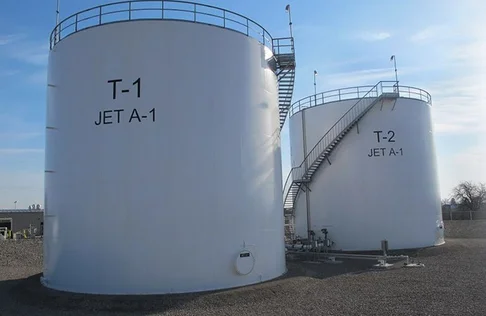
Jet A-1 is a type of kerosene-based aviation fuel used in commercial and military jet engines worldwide. It is the standard fuel for most commercial airlines and is defined by the ASTM D1655 and Def Stan 91-091 standards. Jet A-1 is known for its high energy content, thermal stability, and specific freezing point, making it suitable for long-haul flights and various climatic conditions.
Key Specifications of Jet A-1:
- Base: Kerosene (Paraffinic Fuel)
- Made from refined crude oil distillates with a boiling range of 150°C to 300°C.
- Provides high calorific value for efficient combustion.
- Flash Point: Minimum 38°C
- Reduces the risk of fire during handling and storage.
- Freezing Point: Maximum -47°C
- Ensures flowability at high altitudes and in cold environments.
- Superior to Jet A (used in the U.S.), which has a freezing point of -40°C.
- Sulfur Content: Maximum 0.3%
- Limits corrosion and emissions, enhancing engine life and environmental compliance.
- Additives:
- Antioxidants: Prevent fuel degradation.
- Anti-static agents: Minimize static electricity risks during fueling.
- Biocides: Prevent microbial growth in fuel tanks.
- Fuel system icing inhibitors (FSII): Prevent ice formation in fuel lines.
Applications of Jet A-1 Fuel:
- Commercial Aviation:
- Used in turbofan, turbojet, and turboprop engines of commercial airliners.
- Military Aviation:
- Powers fighter jets, transport aircraft, and helicopters.
- Private Aviation:
- Common in business jets and private turboprops.
- Industrial Uses:
- Occasionally used in power generation turbines in remote locations.
Grades of Jet A-1 Fuel:
Jet A-1 is primarily a single-grade aviation fuel standardized globally. However, there are slight variations and classifications based on additives, climatic adaptability, and military specifications. Here are the key grades and variations of Jet A-1:
1. Standard Jet A-1 (Commercial Grade):
- Specification: ASTM D1655 and Def Stan 91-091.
- Key Features:
- Freezing Point: Maximum -47°C.
- Flash Point: Minimum 38°C.
- Sulfur Content: Maximum 0.3%.
- Additives: Includes antioxidants, anti-static agents, and icing inhibitors.
- Usage: Most commercial airlines worldwide.
2. Premium Jet A-1:
- An upgraded version with enhanced additives for cleaner combustion and better thermal stability.
- Suitable for advanced jet engines and high-altitude, long-range flights.
3. Military Variants of Jet A-1:
a. JP-8 (NATO Code F-34):
- Based on Jet A-1 with additional corrosion inhibitors and icing inhibitors.
- Freezing Point: Maximum -47°C.
- Usage: Standard fuel for NATO and U.S. military aircraft.
b. JP-5 (NATO Code F-44):
- Higher flash point: Minimum 60°C for safety on aircraft carriers.
- Suitable for naval operations and carrier-based aircraft.
4. Arctic and Cold Weather Grades:
- Enhanced with cold flow improvers for extreme low-temperature operations.
- Used in regions like Siberia, Northern Canada, and Scandinavia.
5. Sustainable Aviation Fuel (SAF) Blends:
- Bio-based Jet A-1 blends containing up to 50% sustainable feedstocks (e.g., used cooking oil, algae).
- Compliant with ASTM D7566.
Summary of Jet A-1 Grades:
- Standard Jet A-1: For commercial use.
- Premium Jet A-1: Enhanced for better performance.
- Military Grades: JP-8 and JP-5 with specific additives.
- Cold Weather Grades: For arctic conditions.
- SAF Blends: Sustainable and eco-friendly options.
Production and Supply of Jet A-1:
- Production Process:
- Fractional distillation of crude oil to separate kerosene.
- Hydrodesulfurization to remove sulfur and impurities.
- Additives blending for performance and safety.
- Key Producers:
- Saudi Aramco, ExxonMobil, BP, Shell, Gazprom Neft, and Rosneft.
- Major Exporters:
- Middle East, Russia, U.S., and CIS countries.
Why is Jet A-1 Important?
- Energy Density: High calorific value ensures long-range flights.
- Safety: Specific flash and freezing points minimize risks.
- Standardization: Universal specifications simplify global supply chain management.
Major Suppliers of Jet A-1 Fuel in the World:
The global market for Jet A-1 fuel is dominated by large integrated oil companies and national oil companies (NOCs) with extensive refining, storage, and distribution networks. Here are the key players:
1. National Oil Companies (NOCs):
These are state-owned entities with significant influence in their respective regions.
a. Saudi Aramco (Saudi Arabia):
- Largest oil exporter globally with a substantial share in Jet A-1 production and export.
- Key supply hubs: Ras Tanura, Jubail, Yanbu.
b. Gazprom Neft and Rosneft (Russia):
- Major suppliers to Europe, CIS, and Asia.
- Extensive refining capacity and pipelines for jet fuel distribution.
c. Abu Dhabi National Oil Company (ADNOC) - UAE:
- Leading exporter in the Middle East and Asia.
- Advanced refineries at Ruwais producing high-quality Jet A-1.
d. QatarEnergy (Qatar):
- Significant supplier to Asian and European markets.
- Focuses on premium-grade Jet A-1 with advanced refining technology.
2. International Oil Majors:
Privately-owned corporations with global networks.
a. ExxonMobil (U.S.):
- Key supplier in North America, Europe, and Asia.
- Operates a vast network of refineries and terminals globally.
b. BP (United Kingdom):
- Strong presence in Europe and Asia-Pacific.
- Specializes in airport refueling services and jet fuel logistics.
c. Shell (Netherlands):
- Extensive supply chain covering Europe, Africa, and Asia.
- Focus on sustainable aviation fuel (SAF) in addition to Jet A-1.
d. Chevron (U.S.):
- Key supplier in the Americas and Asia-Pacific.
- Operates large refineries in California, Singapore, and South Korea.
3. Regional Players:
a. Reliance Industries (India):
- Operates the world’s largest refining complex in Jamnagar.
- Major supplier to South Asia, Africa, and Southeast Asia.
b. Sinopec and PetroChina (China):
- Leading suppliers in Asia-Pacific with a focus on domestic and regional exports.
c. PTT (Thailand):
- Key player in Southeast Asia, exporting to neighboring countries.
4. Specialized Aviation Fuel Suppliers:
a. Air BP:
- A division of BP focusing exclusively on aviation fuels.
- Operates at over 800 airports worldwide.
b. World Fuel Services (U.S.):
- One of the largest aviation fuel distributors globally.
- Provides logistics and refueling services for commercial and military aviation.
Summary of Top Suppliers:
- NOCs: Saudi Aramco, Gazprom Neft, ADNOC, QatarEnergy.
- Oil Majors: ExxonMobil, BP, Shell, Chevron.
- Regional Leaders: Reliance, Sinopec, PetroChina, PTT.
- Specialized Suppliers: Air BP, World Fuel Services.
Adlim Gostar's Strengths and Capabilities in Jet A-1 Business:
Adlim Gostar has a promising position in the Jet A-1 fuel trade due to its expertise in the Oil & Gas sector and a well-established network in import, export, logistics, and brokering. Here’s a breakdown of the company’s strengths and its international supply and customer network:
1. Key Strengths of Adlim Gostar in Jet A-1 Business:
a. Expertise in Oil & Gas Trading:
- Adlim Gostar’s portfolio includes Crude Oil, Gasoil, EN590, D2, and D6, showcasing a strong capability in managing refined petroleum products.
- The company’s familiarity with logistics, compliance, and international standards is a significant advantage for expanding into the Jet A-1 market.
b. Strategic Location in Turkey:
- Turkey’s position as a bridge between Europe, the Middle East, and CIS allows Adlim Gostar to act as a key hub for Jet A-1 distribution.
- Access to major ports like Istanbul, Mersin, and Iskenderun facilitates smooth import-export operations.
c. Established Logistics and Storage Infrastructure:
- Adlim Gostar’s existing storage and logistics capabilities can be leveraged for bulk handling and timely distribution of Jet A-1.
- Potential to expand storage facilities for aviation fuel near key airports or ports.
d. Brokering and Contract Management:
- The company’s expertise in brokering high-value contracts is crucial for securing and managing long-term Jet A-1 supply agreements.
- Knowledge in negotiating complex international contracts adds value in dealing with airlines and military clients.
2. International Supply Network of Adlim Gostar:
a. Key Supply Sources:
- Middle East:
- Saudi Aramco, ADNOC (UAE), QatarEnergy are potential suppliers for premium-grade Jet A-1.
- Leverage existing connections for long-term contracts and spot purchases.
- CIS Countries:
- Gazprom Neft, Rosneft, and Lukoil (Russia) for Jet A-1 exports to Europe and Turkey.
- Azerbaijan and Kazakhstan as additional sources.
- Europe:
- Potential partnerships with BP, Shell, and TotalEnergies for sourcing Jet A-1.
- Refineries in Greece, Italy, and Bulgaria as strategic suppliers.
b. Distribution and Customer Network:
- Europe:
- Focus on Southern and Eastern European countries like Greece, Bulgaria, Romania, and Italy.
- Potential to supply airports and airline hubs in these regions.
- Middle East and North Africa (MENA):
- Egypt, Jordan, and Morocco as key export markets.
- Collaborations with airport refueling services and local distributors.
- CIS:
- Georgia, Armenia, and Central Asian countries for cross-border trade.
- Utilize existing trade routes and logistics partnerships.
- Africa:
- North and East Africa as emerging markets for aviation fuel due to rising air traffic.
- Potential to supply Ethiopia, Kenya, and Somalia, especially with the planned visit to Mogadishu.
Cooperation Potentials for Adlim Gostar in Jet A-1:
a. Long-Term Contracts with Refineries:
- Secure off-take agreements with refineries in the Middle East and CIS.
- Establish joint ventures for dedicated Jet A-1 production.
b. Collaborations with Airlines and Airports:
- Partner with regional and low-cost carriers in Europe and MENA for bulk supply contracts.
- Explore partnerships with airport refueling companies in Turkey and surrounding regions.
c. Investment in Storage and Distribution:
- Expand storage facilities at strategic ports in Turkey.
- Consider investing in fuel pipelines or transport infrastructure for efficient delivery.
d. Digital Trade and Risk Management:
- Develop digital trading platforms for real-time Jet A-1 pricing and contract management.
- Offer hedging solutions to manage price volatility for clients.
Summary of Adlim Gostar's Position:
- Strengths: Expertise in oil trading, logistics, and strategic location in Turkey.
- Supply Network: Middle East, CIS, and Europe as primary sources.
- Customer Network: Focus on Europe, MENA, and emerging African markets.
- Growth Opportunities: Long-term supply contracts, storage investments, and digital platforms.